Loading
Loading content, please wait.Loading
Loading content, please wait.From plaster-walled Victorians in the historic district to newer builds around town — prepped right, painted clean.
or call us directly at (269) 437-0891
Marshall is home to one of the largest National Historic Landmark districts in the country, and the houses that make it special — Italianate, Greek Revival, Queen Anne — are also the ones that punish a rushed paint job. Behind those walls is usually lath and plaster, not drywall. Plaster moves with the seasons, hairline cracks telegraph through cheap patch jobs, and decades-old ceilings can carry old calcimine coatings that shrug off modern paint unless they're dealt with first. Good interior painting in these homes starts with knowing what's under the surface.
Trim is the other place Marshall homes demand more. A century of repaints means thick, sometimes alligatored layers, and glossy oil-based coats that new latex paint will not grip without proper cleaning, sanding, and a bonding primer. Done right, original casings, crown, and staircases come back crisp instead of gummed up under one more hasty coat. Done wrong, the new paint peels off in sheets within a year.
Homes built before 1978 can also carry lead-based paint layers. That's not a reason to avoid repainting — intact paint sealed under new coats is generally the safest place for it — but it is a reason to control dust when sanding and to test before disturbing old layers heavily. We'll be straight with you about what your project involves during the walkthrough.
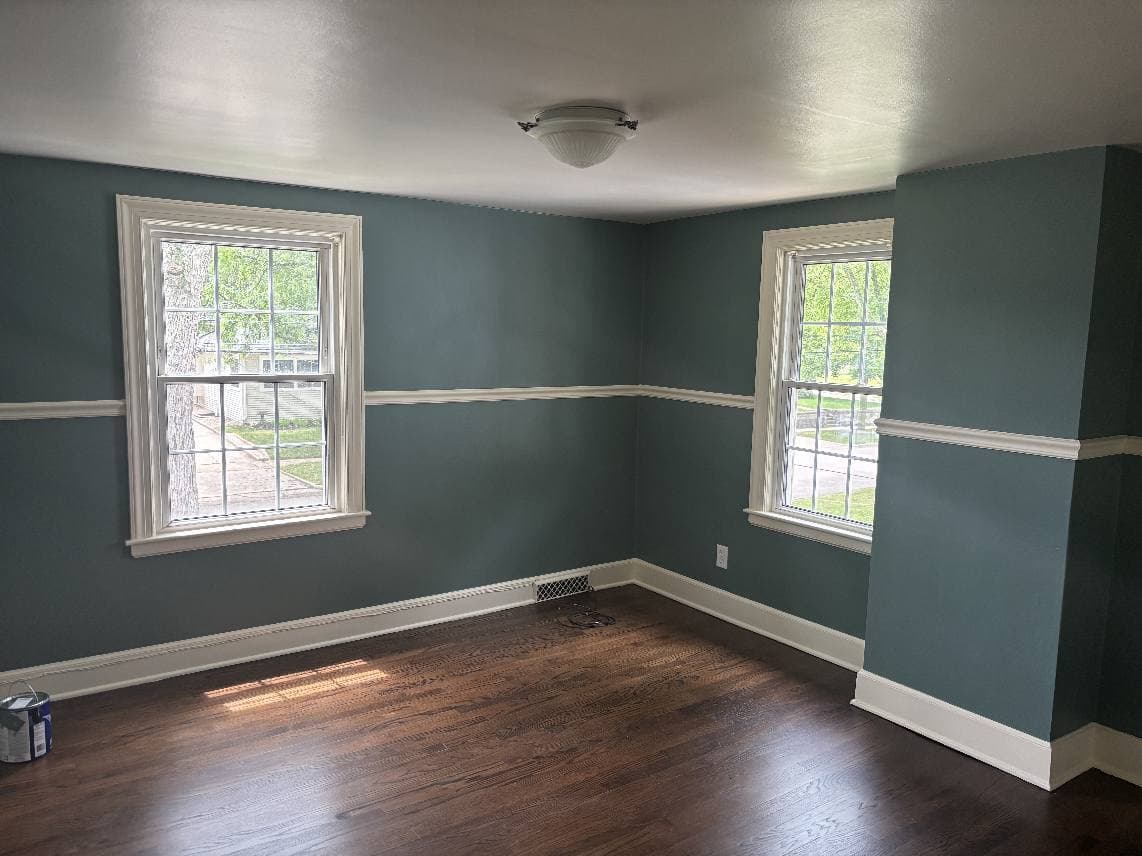
Not every Marshall home is a Victorian, and the same standards apply to newer houses around town: furniture and floors protected, nail pops and dings repaired, surfaces prepped so the finish lasts, and a fixed written quote before we start. We clean up every day and do a final walkthrough with you before we call the job done.
The written quote we send spells out the exact scope. Here's the baseline of what comes with every job.
Timelines below are rough estimates. Actual schedules depend on prep, weather, the size of your job, and our current crew workload. The written quote we send locks in real dates.
Yes — plaster takes paint beautifully when it's prepped correctly. Hairline cracks get opened, filled, and taped rather than just skimmed with spackle, loose areas get stabilized, and previously distempered or calcimine-coated ceilings need sealing before paint will bond. The prep is more involved than drywall, but the result in an older home is worth it.
Rarely. Full stripping is a last resort for badly alligatored or detail-clogged trim. Most older trim repaints well after a thorough clean, scuff-sand, and a bonding primer that lets modern paint grip old oil-based coats. We'll tell you honestly if any sections are far enough gone to need stripping.
Assume any home built before 1978 may have lead-based layers somewhere. The safest approach for most repaints is to avoid aggressive dry-sanding of old layers, control and clean up dust carefully, and seal old paint under sound new coats. If a project calls for heavy surface disturbance, we'll discuss testing and the right precautions before work starts.
A typical bedroom runs 1–2 days including prep and two coats; a whole-home interior usually runs one to two weeks depending on size, repairs, and how much trim work is involved. Older homes trend toward the longer end because the prep is real. Your written quote includes a schedule, and we protect and clean the workspace every day so the house stays livable.
Learn more about our work and the areas we serve:
Free estimates. No pressure. Usually back within 24 hours, often same day.