Loading
Loading content, please wait.Loading
Loading content, please wait.Holes, cracks, water damage, texture matching. Fixed before paint goes on so the finished wall looks like nothing ever happened.
or call us directly at (269) 437-0891
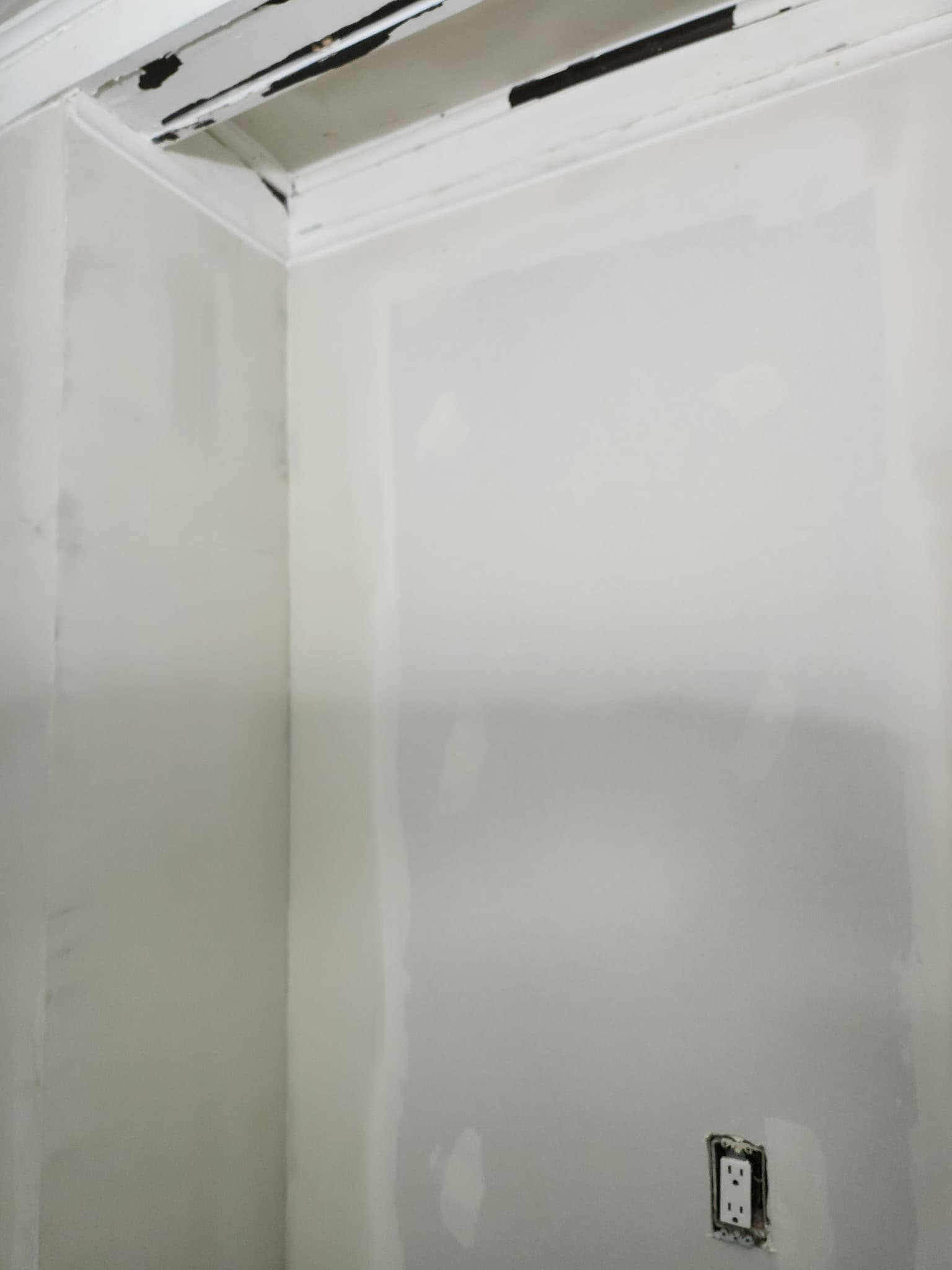
Paint on a bad wall makes the wall look worse. Light catches every nail pop, every joint that's not feathered out, every patch that doesn't blend with the texture around it. Drywall repair is what makes a paint job look professional or amateur.
Most drywall problems aren't the drywall, they're the people who patched it before. A glob of mud over a hole, sanded once, painted twice. Looks fine in the room until light hits it from the right angle, and then you can't unsee it. Doing it right means feathering the patch out, matching the existing texture, and priming so the topcoat reads consistent.
We handle drywall as part of painting work because doing it ourselves means it's actually done before the paint hits. No callbacks. No second visit two weeks later because the patch wasn't ready.
The written quote we send spells out the exact scope. Here's the baseline of what comes with every job.
No mystery, no shortcuts. Each step exists for a reason.
Walk the room with you. Identify holes, cracks, nail pops, water staining, and texture variations. Talk through what's worth fixing.
Clean cuts on damaged sections, replace drywall pieces if needed, tape seams, and apply joint compound in multiple thin layers.
Feather the mud out wide so the patch transitions invisibly into the existing wall. Sand smooth between coats. Final sand for a flat, ready-to-paint surface.
If the wall has orange peel, knockdown, or any other texture, we match it on the patch using the same technique. Smooth walls stay smooth.
Patches absorb paint differently than the surrounding wall. Priming the repair means the topcoat looks uniform.
If we're painting too, we paint. If you're handling paint yourself, the wall is left ready: smooth, primed, indistinguishable from the surrounding surface.
We don't quote sight unseen. These are the variables that move the price up or down once we walk your project.
A single nail pop is fast. Twenty patches across a whole house, or a section of damaged drywall that needs replacement, takes more time.
Smooth walls are forgiving. Heavy knockdown texture takes practice and the right technique to match invisibly. Older orange peel can be tricky to copy on a small patch.
If a leak has saturated drywall, the affected sections need to be cut out and replaced. The leak source has to be fixed first by a plumber or roofer; we work on the visible repair.
If we're painting the whole wall after, we don't need a perfect texture match because the topcoat blends. If you're not repainting, the patch needs to disappear into the existing wall, which is harder.
Every quote we write is a fixed number with the scope spelled out. Honest quotes, clean job sites, finishes that outlast the next election cycle.
Timelines below are rough estimates. Actual schedules depend on prep, weather, the size of your job, and our current crew workload. The written quote we send locks in real dates.
Done right, no. We feather the mud out wide enough that there's no ridge to catch light, match the existing texture, and prime so the patch absorbs paint at the same rate as the surrounding wall. After two coats, you shouldn't be able to find it.
Yes, often. Bad patches usually need to be sanded down, retaped if needed, refeathered with thin layers of mud, and re-textured. It's more work than starting from a clean hole, but it's a normal part of what we do.
We match the most common textures: smooth, orange peel, knockdown, light skip. Very heavy or unusual textures from older homes can be approximated; we'll tell you up front if a perfect match isn't realistic without retexturing the whole wall.
If drywall got wet, the affected pieces usually need to be cut out and replaced. We do this as part of the repair. Important: the leak that caused the damage has to be fixed first (roof, plumbing, etc.) so we don't repair into a still-active problem.
Not always. For small repairs on a wall that hasn't been painted in a long time, you may need to repaint the whole wall to avoid a visible touch-up patch. For freshly painted walls, a careful spot touch-up can blend if you have the original paint.
Most rooms can be patched in a day, but mud needs cure time between coats. Plan for repair work to take one to two days before paint can go on. Bigger jobs and water-damage replacement take longer.
Yes. We carry general liability and workers' compensation insurance, and we can provide proof on request. We're happy to send a certificate to your homeowner's association if you need it.
Family-owned crew based in the region. We treat your home like it's our own, wherever you are on the map.
Don't see your town? We cover all of Southwest Michigan. Call or text us to confirm we serve your street.
Free estimates. No pressure. Usually back within 24 hours, often same day.